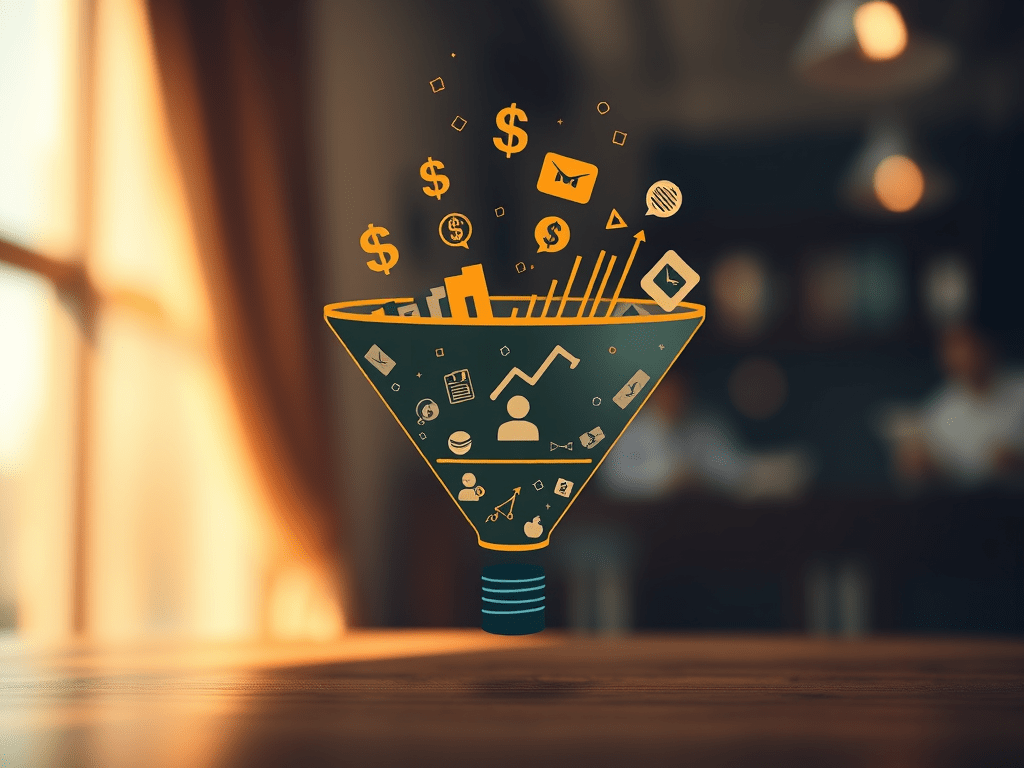
A well-structured sales funnel is one of the most powerful tools for driving revenue growth in small businesses. It guides prospects through every stage of the buyer’s journey, turning casual visitors into loyal customers. Building a funnel that converts requires strategic planning, clear communication, and a deep understanding of your audience’s needs. In this guide, we’ll break down the key stages of a sales funnel and share tips on how to create one that delivers consistent results.
1. Understanding the Sales Funnel
A sales funnel is the process a potential customer goes through from first
encountering your business to making a purchase. It is called a funnel because it narrows down: many leads enter at the top, but only a few convert into paying customers. The goal is to guide prospects through this funnel as smoothly and efficiently as possible. The typical sales funnel has four stages:
1. Awareness: Potential customers discover your business for the first time.
2. Interest: Prospects show interest by engaging with your content or products.
3. Decision: They evaluate whether your offer meets their needs.
4. Action: The prospect becomes a customer by making a purchase.
Each stage requires different strategies and tactics to keep prospects moving through the
funnel.
Stage 1: Awareness – Grabbing Attention
At the top of the funnel, your goal is to attract as many prospects as possible. People at this stage are likely unaware of your business and may not even know they have a problem your product or service can solve. Key strategies include:
(i) Content Marketing: Create valuable content that educates and informs. Blog posts, videos, and social mediacontent are effective ways to capture attention and build awareness.
(ii) Search Engine Optimisation (SEO): Ensure your content ranks high in search engines by optimising for relevant keywords.
(iii) Paid Ads: Use pay-per-click (PPC) ads or social media advertising to reach targeted audiences and drive traffic to your site.
(iv) Lead Magnets: Offer something valuable for free—like an ebook or checklist—
in exchange for the prospect’s contact information. The key is to position your business as a helpful resource, sparking curiosity and building a relationship with potential customers.
Stage 2: Interest – Nurturing Prospects
In the interest stage, your prospects are exploring whether your product or
service is right for them. At this point, it’s crucial to keep them engaged and nurture the relationship. Here’s how:
i) Email Marketing: After collecting emails through lead magnets, send out a series of
nurturing emails that build trust and provide more information about your offerings.
(ii) Webinars or Workshops: Hosting informative events that dive deeper into topics of interest can position you as an expert and strengthen your relationship with potential customers.
(iii) Targeted Content: Case studies, blog posts, or how-to guides that address specific pain points can help prospects see the value of your product or service.
(iv) Social Proof: Include testimonials, reviews, or case studies to build trust and credibility with your audience.
The focus here is on continuing the conversation and keeping prospects engaged until they’re ready to move to the next step.
Stage 3: Decision – Turning Interest into Action
By the time prospects reach the decision stage, they’re comparing their options
and figuring out if your product or service is the best fit. This is your chance to convince them to choose you. Key tactics include:
(i) Clear Calls to Action: Make it easy for prospects to take the next step, whether it’s scheduling a consultation, signing up for a free trial, or purchasing directly from
your website.
(ii) Sales Pages: Create persuasive, conversion-focused landing pages that outline the
benefits of your offering and explain why it’s the best choice.
(iii) Discounts or Special Offers: Offering limited-time deals can create urgency and encourage immediate action. Although this tactic is typically limited to fast moving consumer goods that the customer is familiar with and are purchased on a regular basis
(iv) Product Demos or Consultations: Allow prospects to experience your product or service firsthand through free demos, consultations, or samples. The goal is to remove friction and help prospects feel confident about making the decision to purchase.
Stage 4: Action – Closing the Sale
The action stage is where prospects convert into paying customers. It’s essential to make the purchasing process as seamless as possible.
Key strategies include:
(i) Streamlined Checkout Process: Ensure your checkout process is simple and secure, with minimal steps between adding items to the cart and completing the purchase.
(ii) Follow-Up Emails: Send confirmation emails that thank customers for their purchase,
provide order details, and offer any next steps (e.g., delivery information or product setup
instructions).
(iii) Post-Purchase Nurturing: Continue to engage customers after the sale with
personalized emails, offering additional products or services, or inviting them to join loyalty
programs.
(iv) A satisfied customer is more likely to become a repeat customer and recommend your
business to others, so don’t stop building the relationship after the sale is made.
Optimising Your Sales Funnel for Conversion Once your funnel is in place, monitor its performance and make data- driven adjustments to improve conversion rates. Here are some tips for optimizing your sales funnel:
(i) Track Metrics: Use tools like Google Analytics or CRM software to track key metrics at each stage of the funnel, including traffic, engagement, conversion rates, and revenue.
(ii) A/B Testing (our of our favourites):
Experiment with different headlines, email sequences, and offers to see what resonates best with your audience.
(iii) Follow Up with Abandoned Carts: Many potential customers leave before
completing a purchase. Use automated emails to remind them of the products in their cart and offer incentives to finalize the sale.
(iv) Segment Your Audience: Tailor your messaging to different customer segments based on their interests, needs, and behavior. Personalization improves the likelihood of conversion.
Conclusion on the sales funnel
A well-crafted sales funnel is the foundation of any successful small business. It enables you to systematically attract leads, build relationships, and convert prospects into paying customers. By understanding the different stages of the sales funnel and implementing targeted strategies at each step, you can optimise your conversion rates and drive
sustainable growth. Start by creating a clear, engaging experience for your customers at every stage of the journey, and watch as your small business flourishes.
For some more advanced reading, check out this report from Harvard Business Review on building a Sales Flywheel
Click here for a sales funnel template which will help you visualise your customers buying journey
 wingman Coaching